Bioactive Clean-Up Crew


A Living Foundation for a Healthier Terrarium
A thriving habitat begins beneath the surface.
In nature, the forest floor is alive with countless small organisms working to break down fallen leaves, decaying wood, and organic waste. Together, they help return nutrients to the soil and sustain the ecosystem above.
A bioactive terrarium brings a portion of that natural process into your reptile's enclosure.
At Reptile Feeder Insects, our Bioactive Clean-Up Crew Bundles pair live isopods with springtails—two complementary organisms that help maintain the living substrate of your terrarium.
Whether you're establishing a tropical vivarium, creating a planted reptile habitat, or introducing a more natural approach to enclosure maintenance, choosing the right clean-up crew is an important first step.
What Is a Bioactive Clean-Up Crew?
A bioactive clean-up crew is a community of small invertebrates that lives within the substrate of a terrarium.
Rather than allowing every fallen leaf, shed skin, or fragment of organic matter to accumulate, these organisms help break it down naturally.
- Isopods consume decaying leaves, softened wood, shed skin, and certain organic waste materials.
- Springtails feed on fungi, mold, and decomposing organic matter, helping manage fungal growth in moist environments.
Together, they contribute to nutrient cycling and the ongoing decomposition of organic material.
A clean-up crew does not eliminate the need for enclosure maintenance. Uneaten food, visible feces, and potentially harmful waste should still be removed as needed.
Meet the Clean-Up Crew
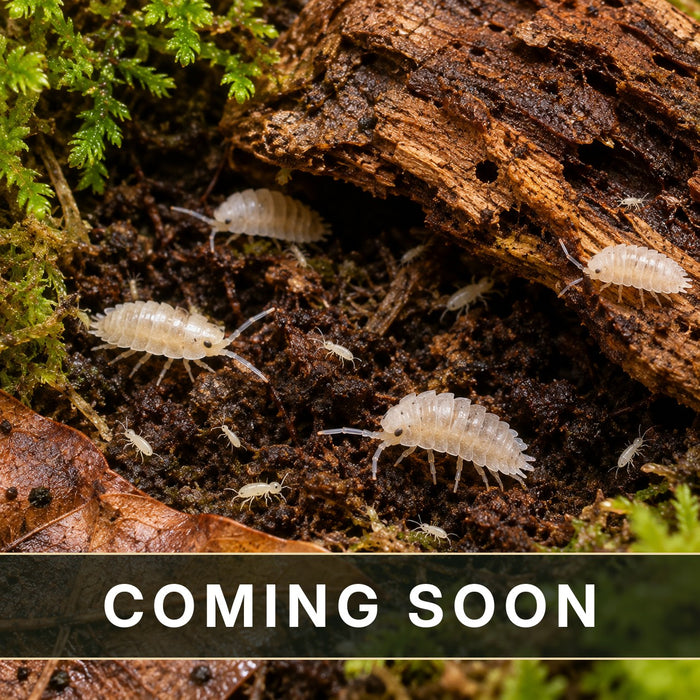
Dwarf White Isopods Trichorhina tomentosa
Small in size. Remarkable beneath the surface.
Dwarf White Isopods are tiny, pale, soil-dwelling crustaceans that spend much of their lives beneath leaf litter and within moist substrate.
Their discreet nature makes them particularly useful in humid tropical vivariums, planted enclosures, and habitats where a smaller clean-up crew is preferred.
They reproduce readily under suitable conditions and are well suited to established, moisture-rich environments.
Best suited for: Humid tropical habitats, smaller vivariums, and planted enclosures.
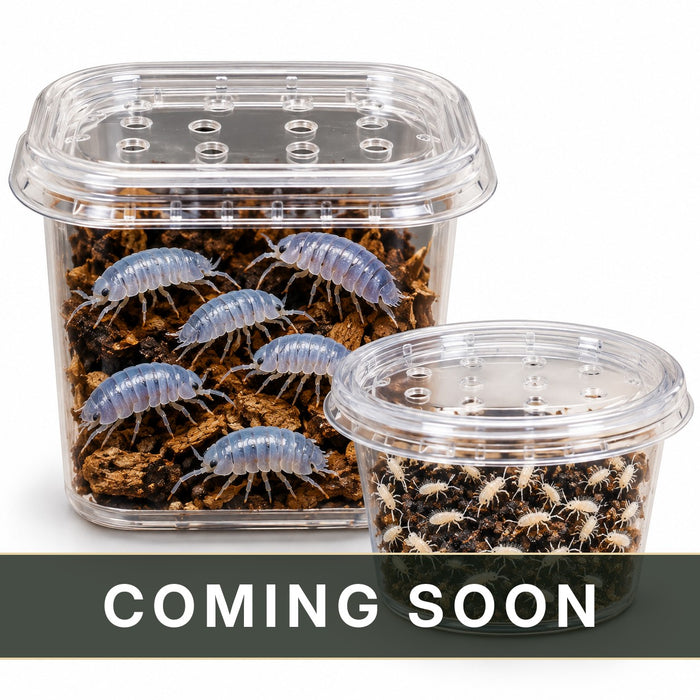
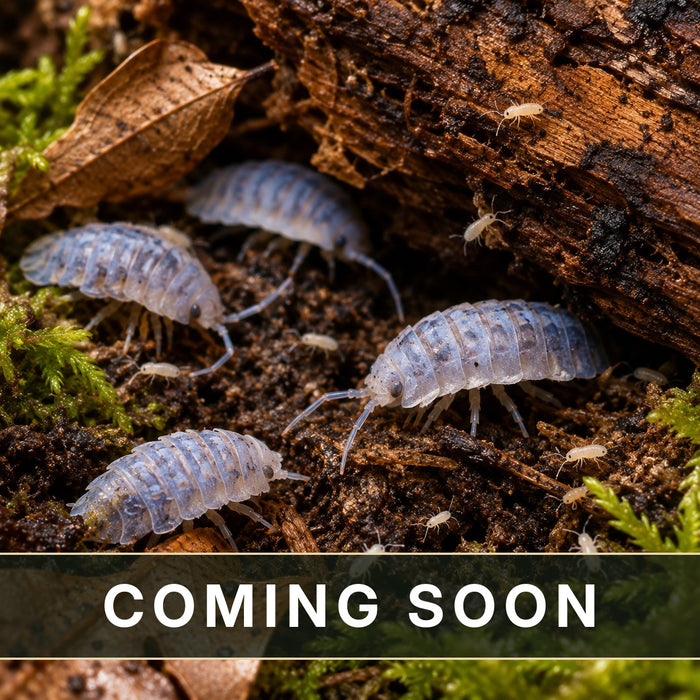
Powder Blue Isopods Porcellionides pruinosus
Active, adaptable, and efficient.
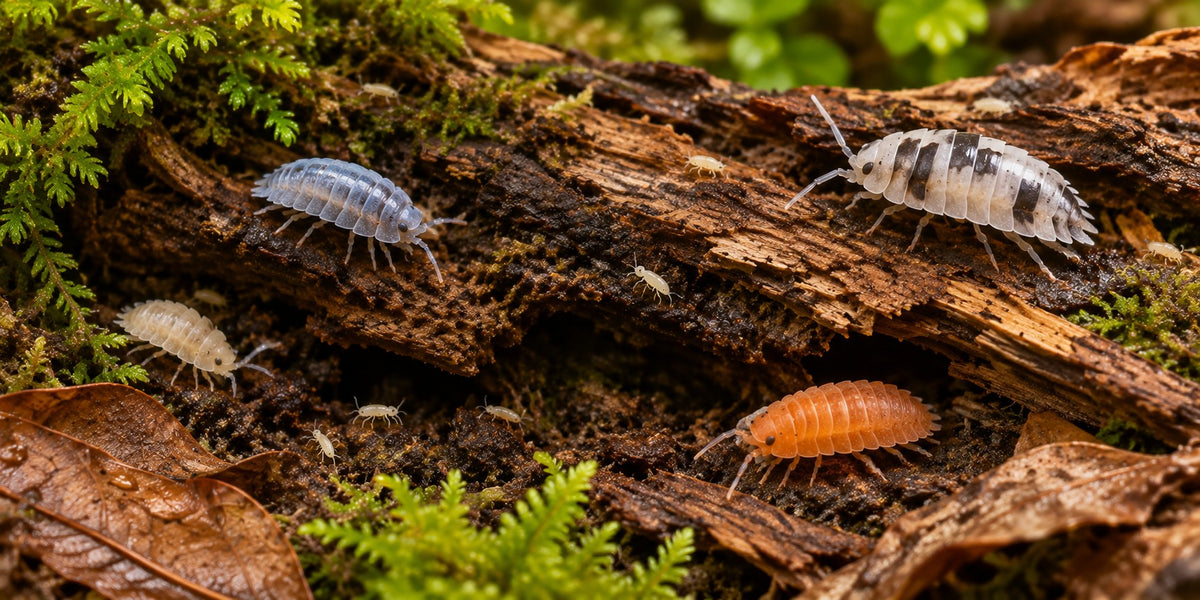
Powder Blue Isopods are known for their soft blue-gray coloration, quick movement, and active foraging behavior.
They explore the substrate surface, decaying wood, and leaf litter while consuming organic material.
Their adaptability makes them a popular choice for a variety of bioactive enclosures, including some semi-arid habitats when a consistently moist refuge is provided.
Best suited for: Tropical, temperate, and appropriately designed semi-arid enclosures.
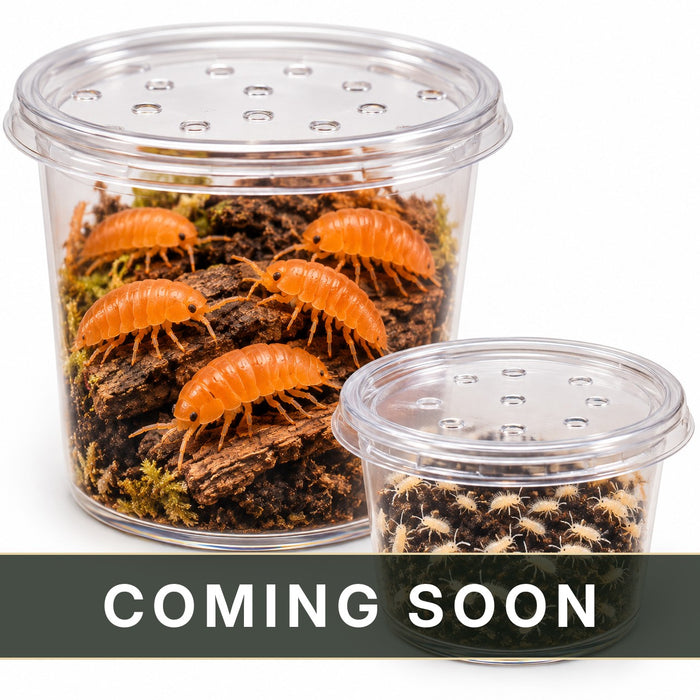
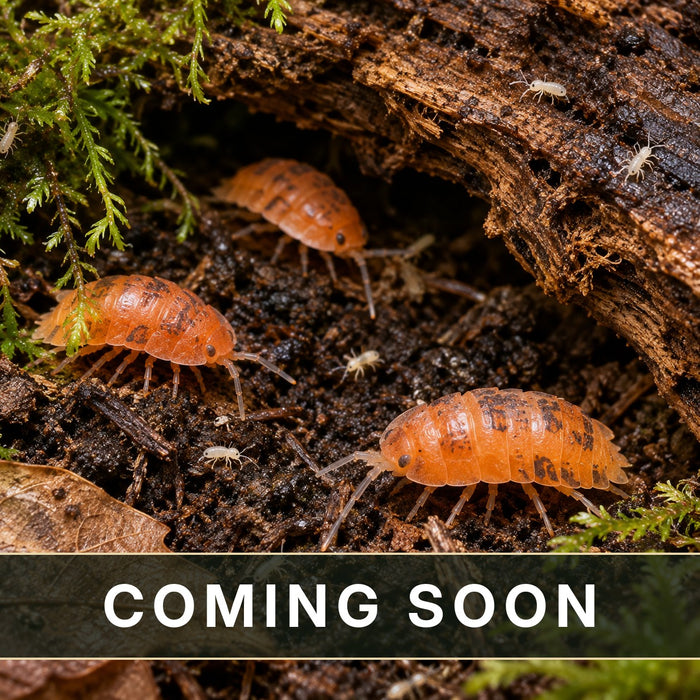
Powder Orange Isopods Porcellionides pruinosus
A vivid touch of color with a practical purpose.
Powder Orange Isopods offer the same active clean-up behavior associated with Powder Blue Isopods, distinguished by their striking orange coloration.
These energetic crustaceans are frequently visible exploring leaf litter, cork bark, and the substrate surface.
They are a popular choice for keepers who appreciate a clean-up crew that is both functional and visually interesting.
Best suited for: Bioactive reptile habitats with suitable moisture gradients and abundant organic material.
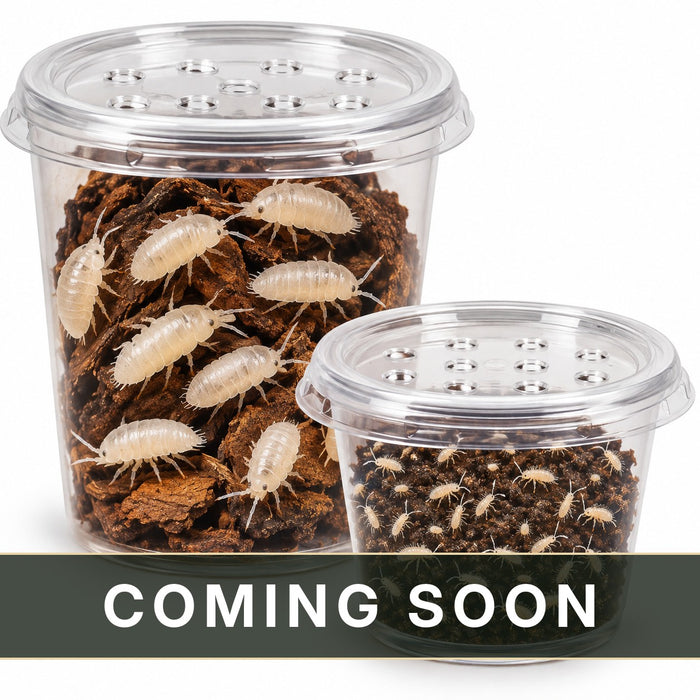
Dairy Cow Isopods Porcellio laevis “Dairy Cow”
Bold markings. A hearty appetite.
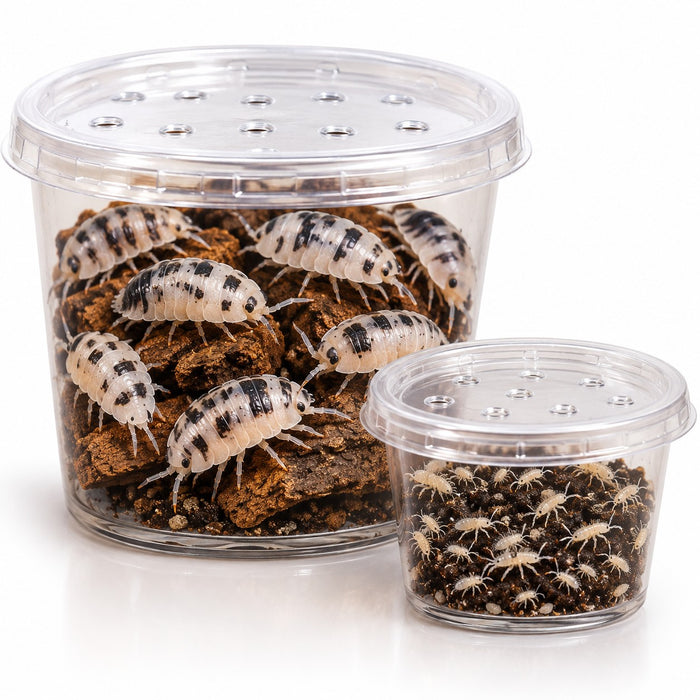
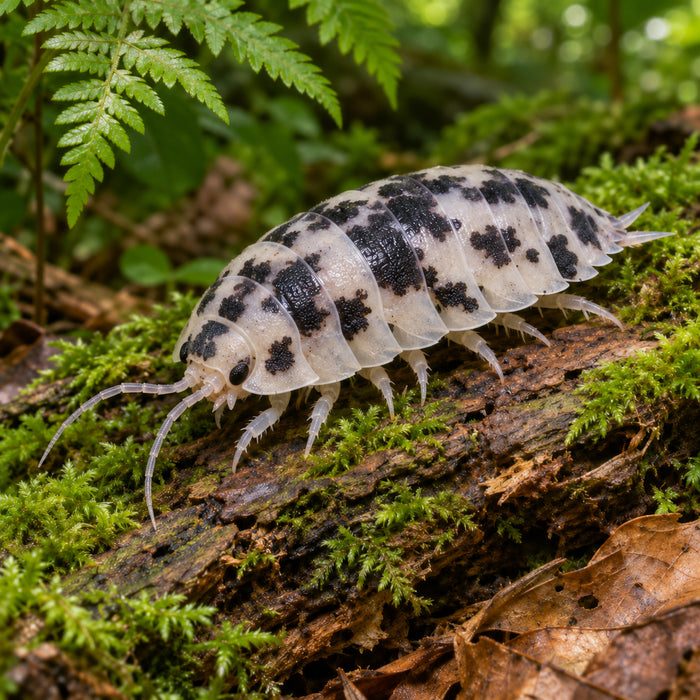
Dairy Cow Isopods are recognized by their distinctive cream-white bodies and irregular black markings.
Larger and more conspicuous than many other clean-up crew species, they are active consumers of decomposing plant matter and other suitable organic food sources.
Their size, rapid reproduction, and substantial appetite make them especially interesting for larger bioactive environments and dedicated isopod colonies.
Because they are active and protein-seeking, they require careful consideration when housed with small, delicate, or molting animals.
Best suited for: Larger, appropriately managed bioactive habitats and dedicated isopod colonies.
Springtails: The Smallest Members of the Crew
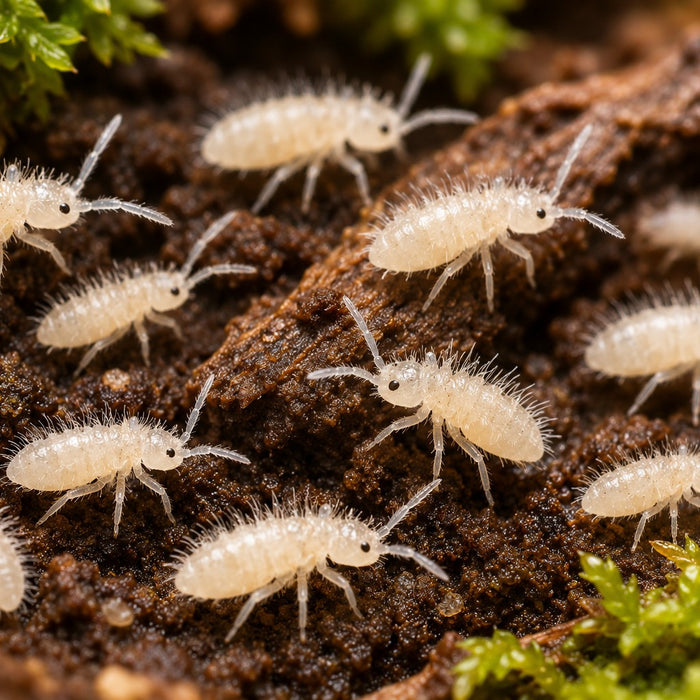
Springtails are tiny, moisture-loving hexapods that live among soil particles, moss, leaf litter, and decaying wood.
Although easily overlooked, they perform an important role in bioactive environments by consuming fungi and decomposing organic material.
Their presence can help manage minor mold growth and contribute to a balanced substrate ecosystem.
Springtails require appropriate moisture to establish and thrive. Their populations naturally fluctuate with environmental conditions and available food.
Explore Our Bioactive Clean-Up Crew Bundles
Choose an isopod variety suited to your enclosure and pair it with a live springtail culture.
- Dwarf White Isopods + Springtails: a discreet, soil-dwelling combination for humid tropical vivariums and planted environments.
- Powder Blue Isopods + Springtails: an active, adaptable combination for a range of properly maintained bioactive habitats.
- Powder Orange Isopods + Springtails: an energetic clean-up crew with vivid orange coloration and active surface-foraging behavior.
- Dairy Cow Isopods + Springtails: a larger, highly visible clean-up crew combination for suitable enclosures and experienced keepers.
Each bundle contains two separately packaged live cultures. Select your preferred isopod variety and available quantities before ordering.
Creating a Healthy Bioactive Habitat
A successful clean-up crew requires more than simply introducing organisms into an enclosure.
- Begin with appropriate substrate. Use a substrate that supports moisture retention, biological activity, and the needs of your reptile or amphibian.
- Provide plenty of leaf litter. Decaying hardwood leaves offer food, shelter, and protection for isopods.
- Include natural hiding places. Cork bark, decaying hardwood, and other suitable hides help provide protected areas where clean-up crew populations can establish.
- Maintain proper moisture. All terrestrial isopods need access to moisture. Humid species require consistently moist conditions, while more adaptable species may benefit from a moisture gradient with a protected damp area.
- Provide calcium and supplemental food. Isopods benefit from an appropriate calcium source and occasional supplemental food, especially while a new bioactive system is becoming established.
- Allow the colony to establish. Introduce your clean-up crew before adding the primary enclosure inhabitant when possible. This gives the organisms time to acclimate, reproduce, and begin establishing themselves.
- Continue regular enclosure care. Bioactive does not mean maintenance-free. Monitor humidity, ventilation, substrate condition, population health, and waste accumulation.
Frequently Asked Questions
Do I need both isopods and springtails?
They perform complementary roles. Isopods help process larger organic materials, while springtails specialize in fungi and smaller decomposing matter. Together, they provide broader clean-up activity.
Can I combine different isopod species?
Some species can coexist, but competition for food and habitat may cause one population to dominate. For many enclosures, one carefully selected isopod species paired with springtails is a practical starting point.
Can clean-up crews live in arid enclosures?
Some isopod species tolerate drier environments, but all require access to a suitable moist refuge. Springtails also need moisture to survive. Enclosure design must accommodate both the clean-up crew and the primary animal's environmental requirements.
Will my reptile eat the isopods?
Some reptiles and amphibians will eat isopods. Providing sufficient leaf litter, hiding places, and a well-established population helps protect the colony.
Do clean-up crews replace cleaning?
No. They assist with decomposition and nutrient cycling, but regular spot cleaning, waste removal, and monitoring remain important.
How long does a clean-up crew take to establish?
Establishment varies with the species, enclosure size, temperature, moisture, and food availability. Springtails may multiply relatively quickly, while isopod populations often require several weeks or months to become established.
Build Your Living Ecosystem
A bioactive terrarium is more than a natural-looking enclosure. It is a carefully maintained environment where plants, microorganisms, invertebrates, and your reptile or amphibian can coexist.
Start beneath the surface. Build a habitat that works with nature.
Explore our Bioactive Clean-Up Crew Bundles and discover the right combination for your enclosure.
Reptile Feeder Insects — Florida Shipping & Local Pickup